


 For years, operators have been searching for more effective and profitable ways in which to monetise the investments they make in their networks.
A new white paper claims that operators now have an opportunity to change that, supported by the increasing adoption of cloud-native architectures that offer more flexible and efficient operations, and the fast-paced development of AI adding intelligence at a network and customer lever.
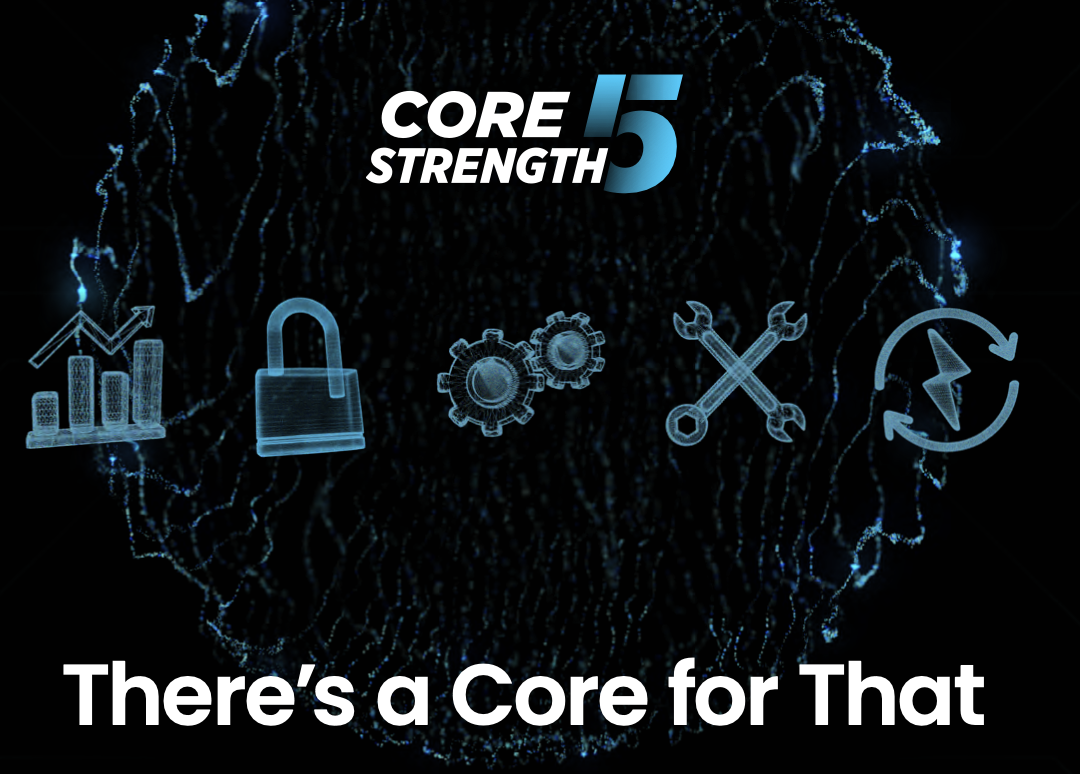
“Core Strength 5: There’s a Core For That” outlines five core strength areas in which operators can move the core beyond being a control layer for connectivity into an engine for growth.
To understand more about the white paper, and the Core Strength 5 opportunity for mobile network operators, Keith Dyer, Editor, The Mobile Network, spoke to Dejan Leskaroski, EVP, Chief Revenue Officer, Mavenir.

Dejan Leskaroski, EVP, Chef Revenue Officer, Mavenir
1. Your new white paper is called There’s a Core for That. What’s the thinking behind it?
Operators come to us with very different priorities. One wants new consumer revenue, another is fighting scam calls, another needs to cut the energy bill or get a service to market in weeks rather than quarters. In every case the answer traces back to the same asset: the Mobile Network Core. It’s the brain of the network, sitting at the center of subscriber identity, policy, charging, service delivery and real-time intelligence, and operators have already invested heavily in it. The title makes that point simply. Whatever the business challenge, there’s a Core for that.
We chose Core Strength deliberately. The strength of an operator lies in its Core, and Mavenir is the company that enables operators to unlock it. We’ve been the cloud-native pioneer in the Core, and we’re now building AI by design across the whole portfolio. When operators think about advancing their Core, we want Mavenir to be the go-to partner.
2. Why do you see the Core as an important growth opportunity for operators right now?
Two things are converging. First, 5G Standalone is finally reaching scale. GSA data shows 29% of 5G services globally were SA as of April 2026, and devices and chipsets have caught up, so the market has moved past launch momentum into a phase defined by what networks can actually do commercially. Dell’Oro forecasts 12% CAGR for the 5G Core market through 2030 and 22% for multi-access edge as low-latency AI demand grows. Second, AI and cloud-native design let operators use the Core in ways that weren’t practical before. Reliable voice and data no longer differentiate on their own, and hyperscalers and OTT players are capturing more of the value created over mobile networks. The Core is the one part of that value chain operators own outright, and it’s their most direct route to putting new services into customers’ hands without a separate app or third-party relationship.
3. The paper introduces the “Core Strength 5”. What is that, and how can it help operators get more value from their networks?
The Core Strength 5 are five connected opportunities enabled by the same operator-owned foundation: Revenue, Security, Productivity, Assurance and Energy. Revenue is about turning network capabilities into services customers will pay for. Security is about protecting customers and trust in the brand across voice, messaging, links and data. Productivity is about launching and improving services faster. Assurance is about detecting issues earlier and resolving them faster instead of reacting to symptoms. Energy is about running the Core more efficiently and sustainably. Each pillar addresses a different business priority, but they reinforce each other because they draw on the same service control, subscriber awareness, policy, charging and real-time intelligence. Mavenir’s role is to bring cloud-native design and AI to all five, so operators increase the return on their Core investment with one coherent platform rather than a collection of isolated tools.
4. What role does AI play in creating new revenue opportunities from the Core?
AI is redefining what’s possible with voice in particular. Real-time language and accent translation, speech enhancement and noise cancellation can be delivered inside a call, from the native dialler, tied to the subscriber’s number and the operator’s billing relationship. An AI receptionist can answer a small business’s existing number and complete a booking within the call. But capability alone doesn’t make a business. AI services have to be activated, governed, charged, secured and assured at scale, and that maps directly onto what the Core already does. Our Integrated AI Platform extends that into a commercial model: operators can meter AI consumption, build token-based plans, run sovereign on-premises models, route selectively to frontier models under policy and cost controls, and integrate monetization with existing BSS. That’s how operators evolve from connectivity providers into AI service providers they actually control.
5. Are there a couple of revenue-generating opportunities that you are particularly excited about?
Premium AI voice is the most immediate. The global Voice AI market grew to $9.05 billion in 2025 and is expected to reach $32.47 billion by 2030, and network-delivered voice services are simpler and more trusted than most app-based alternatives because they work from the number people already have. The other is coverage-led connectivity. Remote Packet Core gives localized data breakout with centralized control, and Deutsche Telekom IoT is already serving more than a million connected cars in the US on that architecture for B2B telemetry and in-car Wi-Fi. NTN takes it further: with a common Core, operators can monetize satellite access using the same subscriber, policy and charging framework, opening up direct-to-device, maritime, aviation, remote enterprise and massive IoT without deploying a separate satellite Core. Terrestar’s hybrid satellite-cellular IoT launch in Canada shows that’s already commercial.
6. Building on this, what will operators find in the white paper, and what do you hope they take away from it?
They’ll find the market context, a walk through each of the five pillars, and live evidence for every one of them: TPG Telecom blocking almost 19 million fraudulent calls and nearly 60 million fraudulent texts in six months, Deutsche Telekom reporting up to 65% energy savings in live 5G Core validation, agentic service assurance spanning L1 monitoring through L3 remediation, and conversational automation taking a product idea to a launch-ready offer in minutes.
Two takeaways. First, none of this is theoretical; operators already own the brain of the network, and the opportunity is to unlock its full strength. Second, Mavenir is the partner doing that in live networks today. If you want cloud-native and AI in the Core, we’re the company to talk to.

Comments
0