


The mobile network industry stands on the cusp of a transformative shift. As operators grapple with exploding data demands, spectrum constraints, and the push toward 6G, AI-RAN emerges as a pivotal paradigm. Central to its success is real-time, high-fidelity data about the wireless channel itself. Without it, AI models operate on sparse, outdated statistics rather than the rich, dynamic insights needed for mission-critical applications.
This theme took center stage at the inaugural Mobile Network Innovation Summit (MNIS) in London on May 12–13, where I had the pleasure of participating in three key panel discussions:
- “Bringing network innovation to market,” alongside Brad Stimpson from Bell Canada
- “Innovation opportunities in AI-powered networks and network operations”
- “Learning from those with the scars” – a panel comprised of people with extensive startup experience in the telco space
On the panel with Bell Canada, we had a productive discussion about how a large mobile operator is collaborating with innovative companies such as Cohere Technologies to bring new solutions to market. By investing in Cohere through its venture arm, Bell is putting real weight behind the innovation and working closely with its established vendors to test and integrate Cohere’s Universal Spectrum Multiplier (USM) technology. Bell’s Brad Stimpson highlighted the operator’s challenges with its 850 MHz low-band spectrum, which provides excellent coverage but struggles with capacity for data-heavy applications. He also emphasised the need for a vendor-agnostic approach that works seamlessly across Bell’s multi-vendor network.
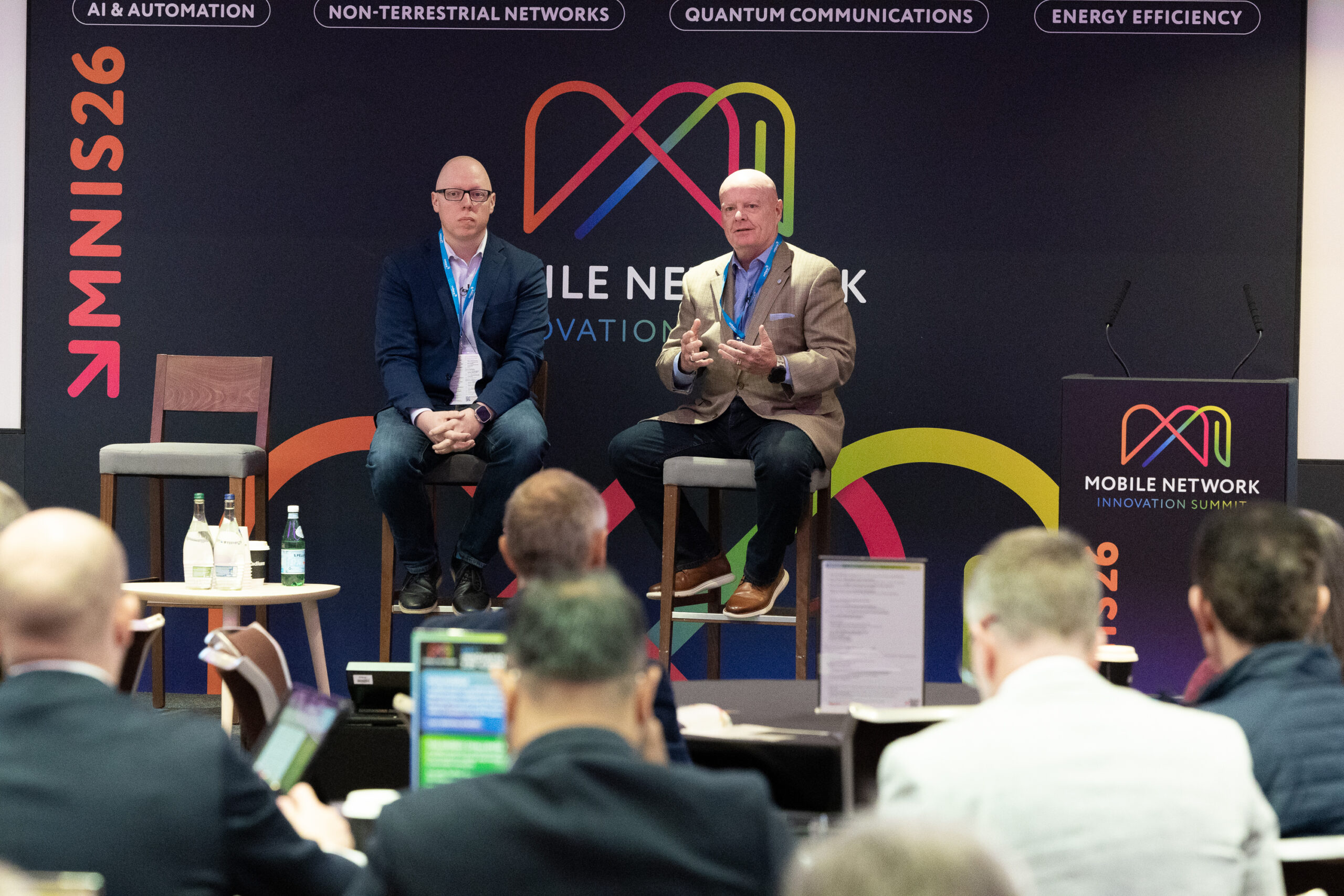
Bell’s Brad Stimpson (left) and Cohere Technologies’ Ronny Haraldsvik on stage at MNIS26.
ECHO launch: ISAC, digital twin and AI-RAN
At MNIS, Cohere unveiled its new ECHO feature (Enhanced Channel Insight with Holographic Observability) for enhanced real-time channel observability. ECHO leverages USM’s coordinated scheduling and Delay-Doppler channel modeling to deliver unprecedented real-time wireless channel visibility — generating hundreds of millions of telemetry data points daily per sector. It logs over 200 distinct attributes every second, exposing latency, motion vectors, angle of arrival, spectral efficiency, MU-MIMO gains, and more. This holographic observability turns seemingly random channel behavior into deterministic building blocks for AI. Real-time datasets are essential to enable AI-RAN and support mission-critical ISAC and Digital Twin networks.
Integrated Sensing and Communications (ISAC) benefits enormously from this new capability. ECHO enriches bi-static and multi-static sensing on existing 5G infrastructure, supporting consumer applications, public safety, and national defense. Combined with Cohere’s Zak-OTFS-based PulsoneTM technology, it positions operators at the forefront of 6G sensing objectives.
Likewise, real-time data is critical for accurate Digital Twin Networks, which require high precision and responsiveness. Traditional twins rely on aggregated statistics; ECHO feeds them continuous, geometry-rich data from the physical radio environment. This enables precise modeling for enterprise, public safety, network optimisation, and predictive maintenance — tracking hardware drift and environmental changes in real time.
ISAC opens the door to transformative use cases for consumers, enterprises, public safety, and national defense. By revealing the geometry of the wireless reflective environment, ECHO provides the rich data foundation needed for accurate digital twins and next-generation applications. As Ray Dolan, Chairman and CEO of Cohere Technologies, noted: “Sensing is the overwhelming objective driving 6G development and Cohere is at the forefront.”
This data-rich approach also creates new monetisation opportunities. Operators can leverage the unique radio-environment dataset for advanced automation, value-added services, and AI-RAN advancements — much like how search data fueled innovation at Google.
Robert Curran, Consulting Analyst at Appledore Research, stated: “Just as Google monetised search data to power future applications, operators and partners can monetise this unique radio-environment dataset to fuel next-generation operations, automation, and value-added services. Cohere’s USM with ECHO may have a transformative impact on AI-RAN, ISAC, and Digital Twin Networks.”
The message from MNIS and Cohere’s ECHO launch is clear: the AI-RAN era demands more than algorithms — it requires deep, real-time observability of the physical layer
AI-powered networks innovation
Later at MNIS, we discussed “Innovation opportunities in AI-powered networks and network operations” with Viavi’s Nick Carter, TM Forum’s Dmytro Gassanov and Professor David Grace from the University of York – moderated by the one and only, Professor Simon Saunders, We explored AI for automation, zero-touch operations, new air interfaces, and investment hotspots across RAN, core, and NetOps. At Cohere, we believe real-time data like ECHO’s is the missing link for scalable AI inference, layered optimisation, and cross-site coordination in borderless cell environments. We all agreed that AI-RAN needs both real-time and offline data to learn, recommend, and succeed.
The message from MNIS and Cohere’s ECHO launch is clear: the AI-RAN era demands more than algorithms — it requires deep, real-time observability of the physical layer. Those who harness it will unlock not just efficiency gains but entirely new revenue streams and 6G-ready capabilities. The future of intelligent, sensing-aware networks is here, powered by data that finally sees the RF channel, as it truly is.
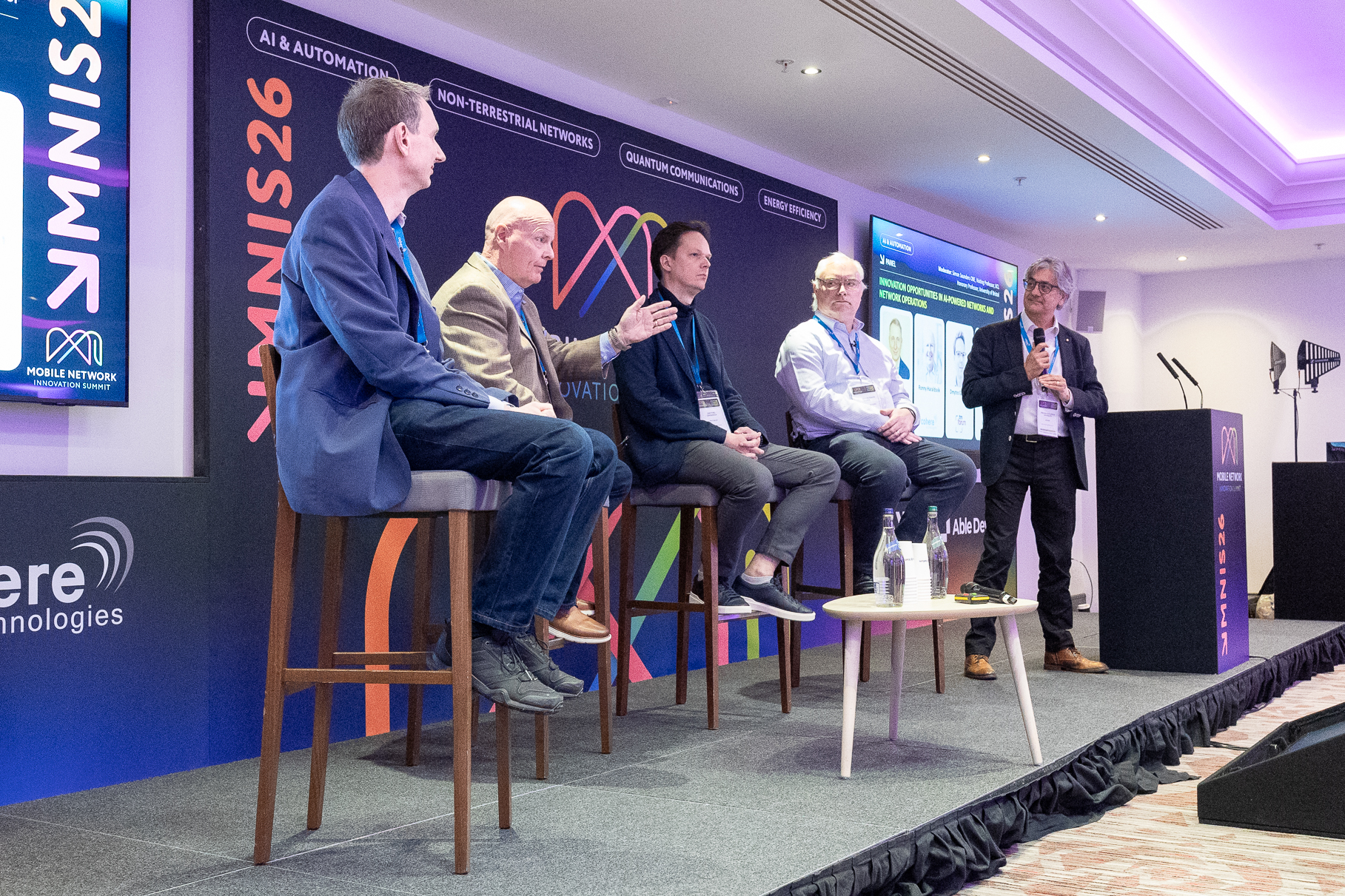
The AI-powered networks panel. “Real-time data is the missing link for scalable AI inference.”
The scale-up journey
Finally, on the panel “Learning from those with the scars,” we shared many examples of what it takes to succeed in the telco space, where as many as 90% of small innovative companies fail. Len Schuch (CEO of TEOM.ai) and Peter Claydon (CEO of RANsemi) described successes (such as Ubiquisys, acquired by Cisco in 2013) and a few failures (which we’ll leave off in this blog!).
Together, we stressed the importance of identifying “champions” within target mobile operators, avoiding non-paid trials, securing support for vendor integration, and ideally obtaining investments from the operators themselves. Personally, I drew from my experience at Shasta Networks (acquired by Nortel), Flarion Technologies (acquired by Qualcomm), BelAir Networks (acquired by Ericsson), Bytemobile (acquired by Citrix), and SpiderCloud Wireless (acquired by Corning). My nearly seven-year journey at Cohere Technologies continues.
Looking ahead, at Cohere Technologies we remain committed to unlocking the full potential of existing spectrum and infrastructure through software intelligence and our Multi-G waveform, Pulsone. From boosting 5G performance today to paving the way for ISAC and AI-RAN tomorrow, our goal is to deliver measurable value for operators, partners, the defense community, and their customers.
More on Cohere Technologies
Ronny Haraldsvik is CMO, SVP Business Development & Field Systems Engineering, Cohere Technologies.
Learn more about Cohere Technologies, Universal Spectrum Multiplier, and ECHO at www.cohere-tech.com, and follow on X @Pulsone.
